Lines
Brake lines & hoses
Rusted lines replaced with approved line, bled and pressure-tested.
See brake linesGuide · Winter in Columbia County
Salt does more damage to brakes around here than mileage does. Here is where it attacks, what it looks like on a real job, and the habits that slow it down.
Road salt works by dissolving into brine, and brine is exactly what gets thrown up into wheel wells and onto the underside of a vehicle all winter. Along the North Branch the damp keeps it working long after the roads have dried.
Brakes take the worst of it because they are steel and iron parts that live right behind the tyres, and because the parts that need to move freely — caliper pistons, slide pins, parking brake mechanisms — are the first to seize when rust gets in.
The result is a pattern we see constantly: pads that still have thickness left, on a brake job that is expensive anyway because the hardware rusted solid, a caliper stopped releasing, or a line started to weep.
From a real job
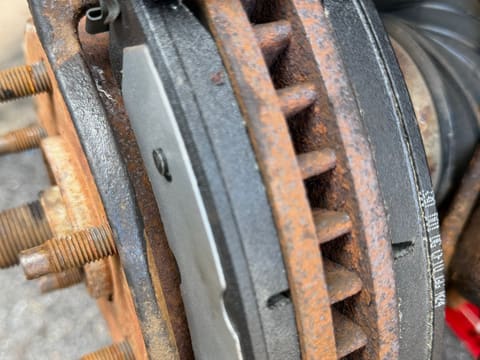
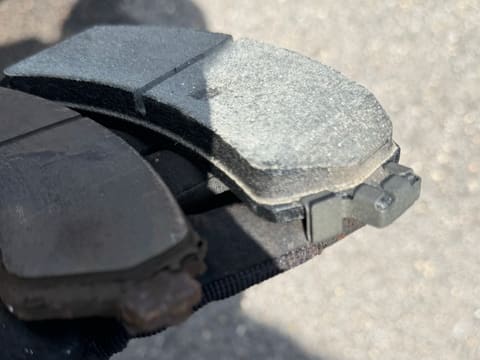
Both photos are from one of Jayden’s jobs — see the whole job, start to finish.
Where salt does the damage
What actually helps
Wash the salt out of the wheel wells and off the underside after salty weeks, not just at the end of winter.
Brakes that get used regularly keep their braking surfaces clean. Vehicles that sit through winter seize first.
Every two to three years, or as your manual says. Wet fluid rusts the system from the inside while salt works outside.
Before winter and after it. Catching a sticking caliper early is the difference between one part and a whole axle.
Straight answers
Yes. Rinsing salt out of the wheel wells and off the underside after a salty spell slows corrosion on lines, calipers and hardware. An underbody spray at a car wash does the job.
Bare cast iron rusts on the surface overnight in damp air. That film wipes off in the first few stops and is harmless. Rust that stays, pits the braking surface or eats the rotor’s edge is the kind worth checking.
Before winter, so nothing marginal goes into the salt season, and again in spring once it is over. The inspection is free at the shop either time.
No. A steel line rusting from the outside is thin along its length, not just where it weeps, so the run is replaced with new line bent and flared to fit. That is shop work.
The repairs
Lines
Rusted lines replaced with approved line, bled and pressure-tested.
See brake linesCalipers
Seized calipers fixed before new pads go on.
See calipersRotors
Pitted rotors measured, and replaced only when they are past it.
See rotorsFree brake inspection at the shop — lines, calipers, rotors and fluid, with the results written down.